 Skip to content


Natural Stone Landscaping in Brampton: What Every Homeowner Needs to Know Before Installing Stone
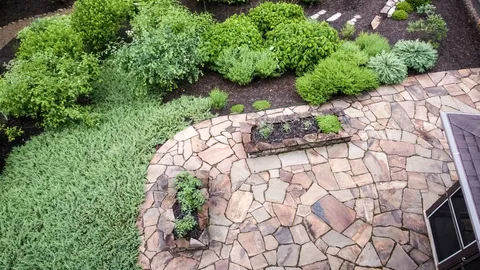
Natural stone landscaping is one of the most permanent and value-retaining investments a Brampton homeowner can make. Unlike manufactured alternatives, natural stone carries geological age, structural density, and surface variation that no factory process can replicate. Before calling a contractor, before selecting a stone type, and before approving a design, understanding how natural stone behaves in Brampton’s climate — and what expert installation actually involves — changes every decision you make. This guide covers the full scope of natural stone landscaping in Brampton: material selection, installation processes, stone type comparisons, climate considerations, and the difference between decorative placement and structural performance. What Is Natural Stone Landscaping? Natural stone landscaping refers to the design and installation of outdoor features using quarried stone — materials extracted directly from the earth rather than cast, pressed, or manufactured. In residential landscaping, natural stone appears in several functional and aesthetic roles: Stone patios — flat surfaces for outdoor living areas Flagstone walkways — irregular or cut stone paths connecting areas of a property Natural stone steps — stacked or cut stone used for grade transitions Retaining walls — structural stone walls that hold soil and manage elevation Garden edging and borders — stone used to define planting zones and beds Each of these applications involves different stone characteristics, different load and drainage requirements, and different installation methods. A stone patio and a retaining wall share the same raw material category but almost nothing else in their engineering logic. Why Brampton’s Climate Makes Natural Stone the Right Material Brampton, Ontario experiences a humid continental climate with hard winters, significant freeze-thaw cycling, and wet springs. This is not a hospitable climate for poured concrete or composite materials that crack and heave across temperature cycles. Natural stone, however, responds differently. Dense stone types — granite, limestone, and quartzite — absorb very little water. Low absorption rates mean less internal moisture during freeze cycles, which means fewer cracks and less surface spalling over time. This is the primary reason natural stone has been used for outdoor hardscaping in cold climates for centuries. Additionally, natural stone surfaces age in ways that appear intentional. What concrete shows as deterioration — surface pitting, staining, color fade — natural stone shows as patina. The material becomes more visually interesting over decades, not less. Stone Types Used in Brampton Landscaping Not all natural stone performs the same way, and the selection of stone type is one of the most consequential choices in any landscaping project. Limestone is widely used in Brampton for steps, walls, and flagging. It cuts cleanly, has a neutral gray-beige palette that complements most home exteriors, and stacks well for retaining structures. Its slightly higher porosity compared to granite requires sealing if used in high-traffic patio applications. Granite is the densest and hardest option. It is the preferred stone for steps and high-load walkways where compressive strength matters. Granite’s low absorption rate makes it especially well-suited to Brampton winters. Flagstone — which refers to a format rather than a single stone type — typically includes sandstone, slate, and quartzite cut into flat slabs. Flagstone installations range from dry-laid irregular patterns to mortared uniform grids. The variation in surface texture makes flagstone naturally slip-resistant, which is an important safety characteristic for outdoor steps and ramps. Fieldstone and boulders are used in naturalistic garden designs and as accent elements in retaining walls. These are unshaped stones placed for aesthetic continuity with natural landscapes. The Installation Process: What Expert Stone Work Actually Involves The visible result of natural stone landscaping — the finished patio, the completed walkway — represents only the final stage of a process that is mostly invisible. What separates durable installations from ones that shift, crack, or sink within two or three seasons is everything that happens before the first stone is placed. Site assessment and grading determine drainage patterns. Water must move away from the home’s foundation, not pool behind a retaining wall or under a patio. Incorrect grading is the most common cause of premature stone failure. Base preparation involves excavation to the appropriate depth — typically deeper for load-bearing applications like steps and walls — followed by compacted granular base material. The base layer absorbs movement, distributes weight, and provides the drainage layer that prevents frost heaving. Stone setting differs by application. Dry-laid flagstone over compacted sand allows for natural drainage and minor adjustment over time. Mortared installations are more rigid but require precise slope engineering at the base level. Retaining walls require batter (backward lean), drainage aggregate behind the wall face, and in taller walls, geotextile fabric or structural reinforcement. Finishing and sealing protect porous stone types and enhance color depth. Sealing is a maintenance step, not a structural one, and needs reapplication on a cycle depending on the stone type and sun exposure. Natural Stone Steps: The Most Technically Demanding Application Of all natural stone installations Brampton, steps carry the highest structural and safety requirements. Steps bear concentrated point loads from foot traffic, must maintain consistent rise and run dimensions for safe use, and must resist the lateral creep that freeze-thaw cycles introduce at every joint. Properly installed natural stone steps are anchored into the grade with a compacted base, set with sufficient overlap between treads, and positioned so that surface water drains forward off the tread rather than pooling. The weight of the stone itself contributes to stability, which is why dense stone types are preferred for this application over lighter alternatives. Target Landscaping has manufactured natural stone steps, walls, and flagstones since 1998 — a depth of experience that reflects how differently stone behaves across projects, seasons, and soil conditions. Choosing the Right Natural Stone Contractor in Brampton The quality of a natural stone installation is almost entirely a function of the installer’s knowledge and process discipline. The following criteria distinguish expert natural stone contractors from general landscapers who occasionally work with stone: Material sourcing — Expert installers work directly with stone suppliers and understand the variation within stone types. Not all limestone
